
In the glass deep processing industry, horizontal glass washing machine and vertical glass washing machine are the two most mainstream types of washing equipment. Many global purchasers, glass factory owners and project contractors often face a difficult choice: which type is more suitable for their own production needs? To help customers make accurate selection, we will analyze the core differences between the two machines in detail from structure, applicable glass specification, working principle, production efficiency, application scenario, floor area, maintenance cost and configuration, combined with the actual parameters and design of Junya equipment.
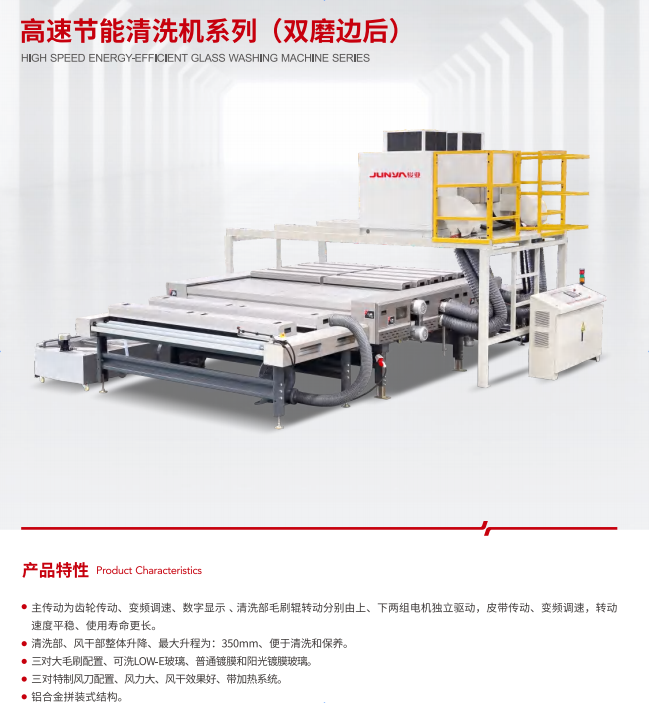
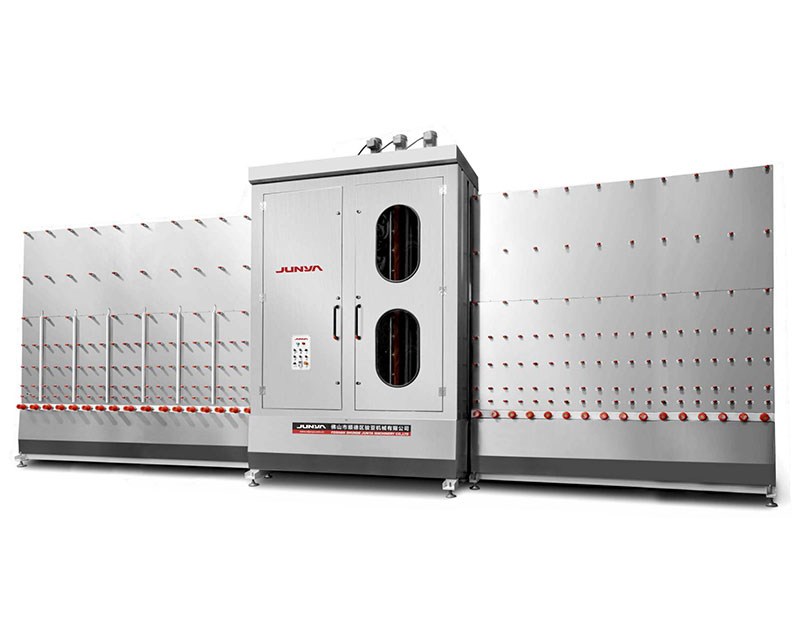
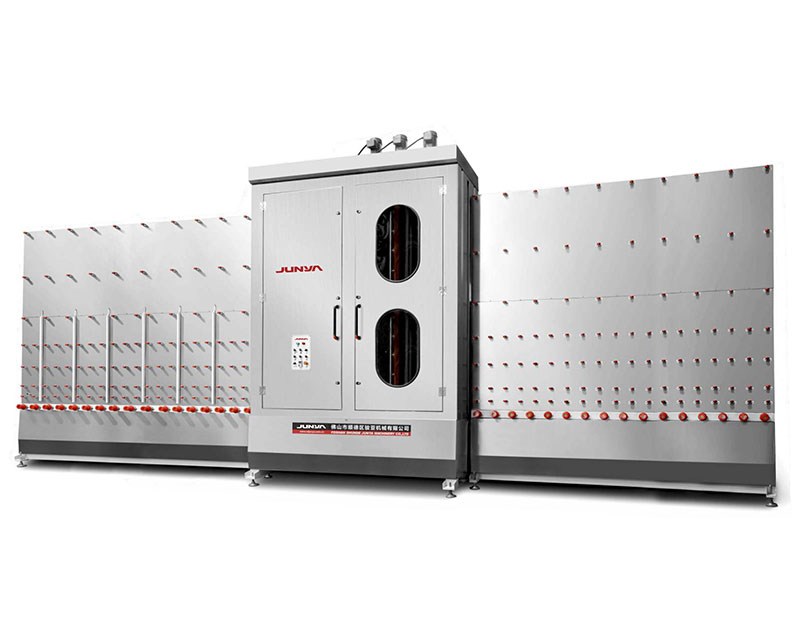
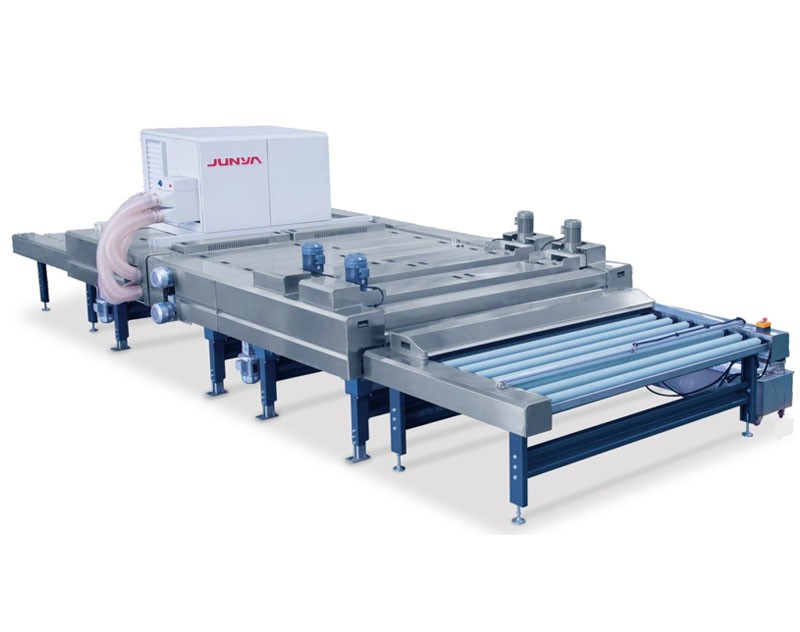
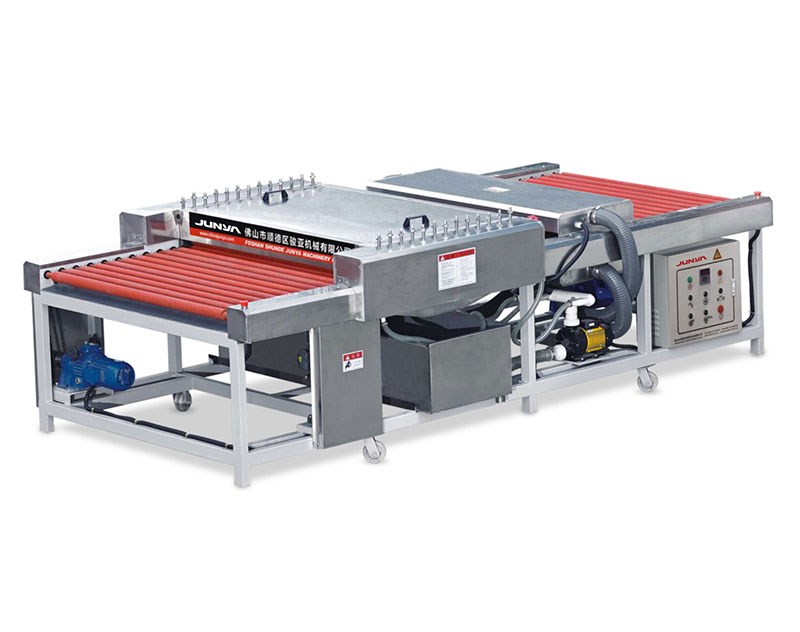
First of all, the most intuitive difference between horizontal and vertical glass washer lies in the structural design and glass conveying method. Horizontal glass washing machine adopts horizontal flat layout, glass is placed flat on the rubber roller conveyor belt, passing through loading section, washing section, air drying section and unloading section in horizontal direction. The whole machine has a wide span and stable conveying, suitable for large-size and thick glass. Vertical glass washing machine adopts vertical standing structure, glass stands upright and passes through the cleaning unit vertically, with compact overall layout and small floor area, very suitable for workshops with limited space.
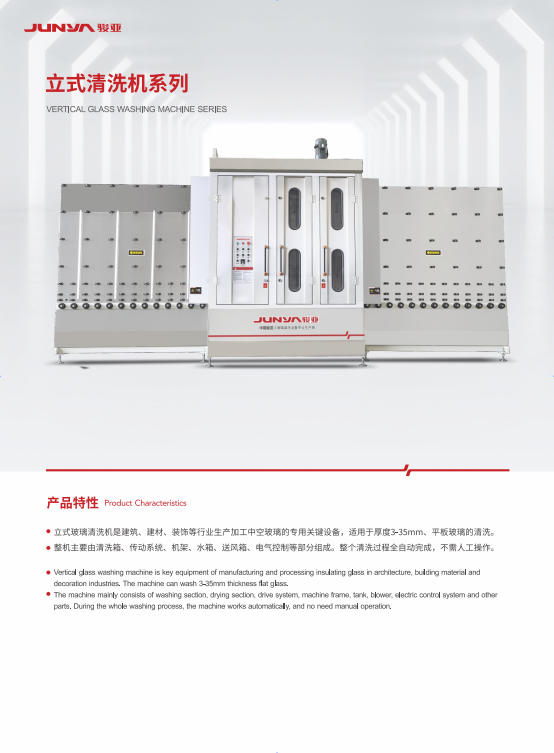
In terms of applicable glass thickness and size parameters, there is a clear boundary between the two. Junya industrial vertical glass washing machine 3-12mm is designed for conventional medium and thin glass, the standard applicable thickness is 3mm to 12mm, and the individual model can be adjusted to 19mm by screw fine-tuning. The maximum processing width of vertical machine is mainly 2000mm, and the minimum glass size is 500×300mm, focusing on medium and small size architectural glass, door and window glass and daily-use glass. While the horizontal type supports 3-25mm ultra-wide thickness range, the maximum width can reach 3300mm, the minimum size 400×400mm, covering large-size thick glass, Low-E glass, photovoltaic glass, tempered glass and coated glass.
In terms of working speed and production capacity, the difference is also obvious. The working speed of horizontal glass washing machine can be adjusted from 0-15m/min, with fast conveying speed and large hourly output, suitable for large-scale assembly line mass production of large glass factories. The working speed of vertical glass washing machine is 0-7m/min, the operation is more stable and gentle, which can avoid the tilt and collision of small glass during vertical conveying, and is more suitable for medium batch and stable production of small and medium processing workshops.
From the perspective of application scenarios and industry matching, horizontal models are the first choice for large tempering factories, coating factories, mirror factories, photovoltaic glass factories, electronic glass supporting factories and large deep processing production lines. Vertical models are more favored by door and window processing factories, architectural glass workshops, small and medium glass processing plants and decoration glass manufacturers. Customers can choose according to their own main glass size, thickness and daily output.
In terms of material and structural configuration, Junya glass processing washing machine both adopt high-standard configuration. Horizontal machine uses aluminum alloy assembled frame + 304 stainless steel water contact parts, washing and drying section can be lifted 350mm as a whole, easy to clean and maintain, movable side water tank design, convenient water changing and impurity cleaning. Vertical machine adopts Italy introduced technology, thickened stainless steel welding body, multi-group circulating water tank and high-efficiency filter screen, equipped with separate circulating wind drying system, with energy saving and low noise, even in winter without heating can reach 40℃ natural drying effect.
In terms of later maintenance and investment cost, vertical glass washing machine has smaller floor area, simpler structure and lower overall purchase and maintenance cost, suitable for budget-limited small factories. Horizontal machine has richer configuration, stronger compatibility and longer service life, although the initial investment is slightly higher, but it can meet multi-glass multi-spec production, long-term cost performance is higher.
In terms of electrical configuration and safety performance, both of Junya horizontal and vertical washing machines adopt first-line brand electrical parts such as Schneider, Chint, Rexroth and Frecon, with complete overload, phase loss, short-circuit protection. The operation panel is simple and intuitive, with one-key start and stop, frequency conversion speed regulation and digital display of thickness and speed, which is friendly for workers to operate. The machine strictly complies with CE standard and GB industry testing standard, no water mark, no roller mark, no scratch after cleaning, reaching international export standard.
To sum up, if your factory mainly processes large size, thick glass, Low-E, photovoltaic, tempered coated glass and needs high production capacity, choose horizontal glass washing machine; if you mainly process conventional 3-12mm medium and small glass, limited workshop space and pursue cost performance, vertical glass washing machine is more suitable. As a professional glass washing machine manufacturer, Guangdong Junya Intelligent Equipment provides complete horizontal and vertical series models, supporting personalized parameter customization and exclusive scheme design for global customers.
